Mon–Fri: 8 AM–10 PM, Sat–Sun: 6 AM–9 PM(501) 274-1092
Caliber Little Rock Concrete CompanyCaliber Little Rock Concrete Company

Concrete driveway building in Little Rock AR - a slab built on a solid base

Old driveway cracked, sinking or holding water? We dig out, build a firm base and pour a new one that drains away from your house.

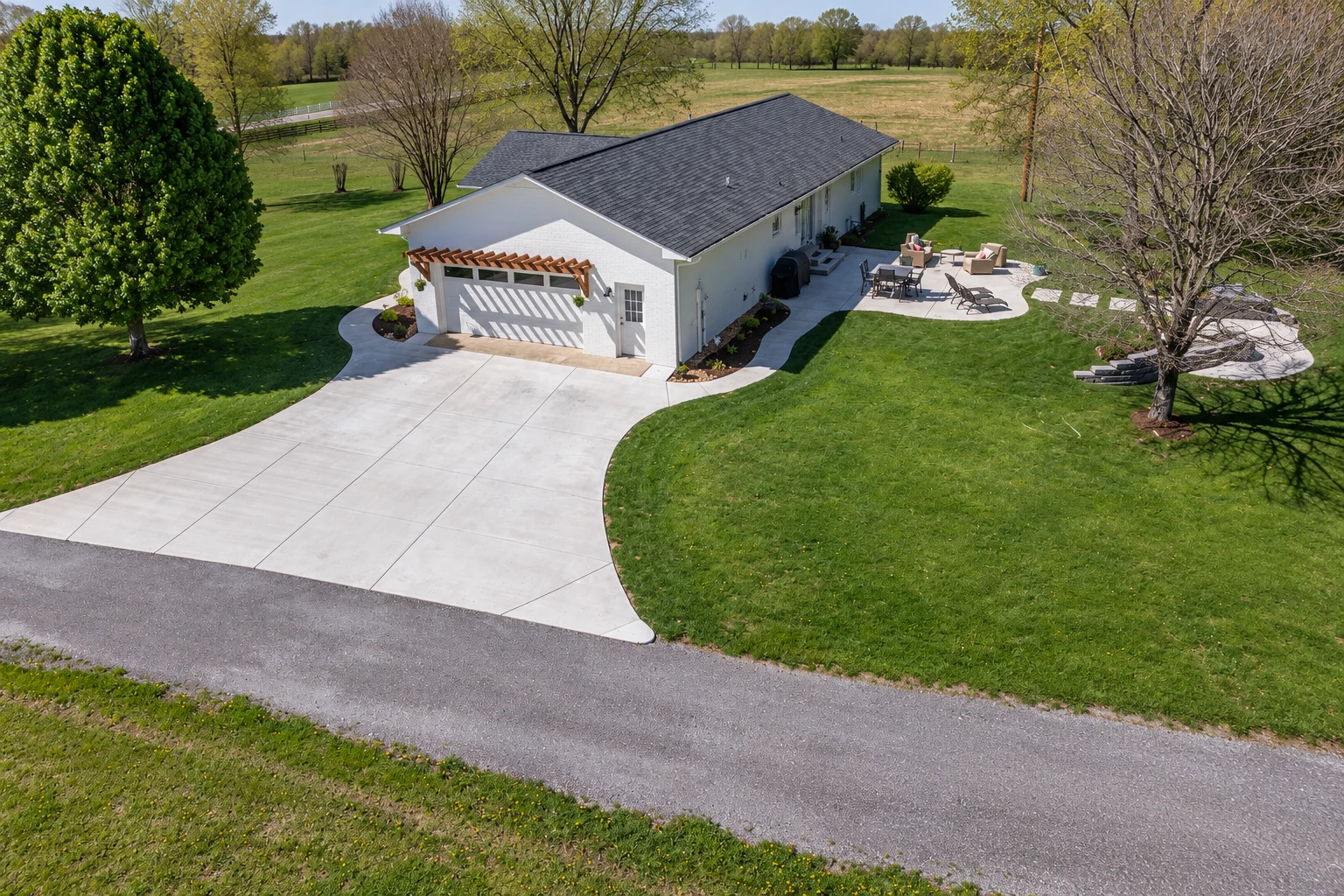
Concrete driveway curves from the road to a white garage, with a broad lawn and outdoor seating area nearby.

What does it take to build a new concrete driveway in Little Rock?

Concrete driveway building in Little Rock, AR starts below the dirt line. We dig out to firm ground, pack a solid base, then pour and finish the slab and let it cure before you drive on it.

Most calls start with an old driveway that's cracked across, sunk at one corner, chipping on top or holding a puddle by the garage door. Usually the trouble is underneath, because somebody raked the dirt level instead of digging it out and packing a base, or set the slab falling toward the house. A new driveway only fixes that if the ground work gets done first.

The price moves with the size, how thick the slab needs to be, whether the old driveway comes out, how much soft dirt we replace and the finish you pick. The schedule turns on the dig and base work, the weather on pour day and the wait while the concrete cures. I check with the city or county office for your address about what your job needs, and we handle the permit paperwork when one's required. The estimate gives you the number for your driveway.

What happens when you call about a driveway in Little Rock?

It's three steps, and you'll know who's doing what at each one. You talk to me at the start, and I'm still there at the end.

I look at your driveway myself before you get a number

Call (501) 274-1092 or send the form, and I come out to measure, check the ground and see where the water runs on your lot. We talk through your choices, like thickness and finish, and you get a price for your driveway, not a guess over the phone.

Our own crew does the work, and I check the base first

Our crew handles the dig, the forms and the pour, and I'm on site running the job. I check the prep before the concrete truck comes, because once the slab is down nobody can fix what's under it. I've run this business since 2020.

Licensed and insured, with a walk-through at the end

We're fully licensed and insured, and in Arkansas the state's Residential Contractors Committee licenses home improvement contractors, so it's fair to ask anyone you hire which license class they hold. When the job's done, I walk the finished driveway with you. Your satisfaction, guaranteed.

What our concrete driveway building covers

First I find out what's going to use the driveway, from the family car to the delivery trucks that come up it, because that sets how thick the slab and the base need to be. We sort out the curb cut where your driveway meets the street, and before we pour, you'll know how long to park somewhere else. Then the crew tears out the old driveway if there is one, digs out, builds the base, pours, finishes and cuts the joints, in that order.

Plenty of folks add a patio while the crew is already here, and concrete patio construction goes on the same kind of packed base. If you want the driveway to look like stone or brick, stamped concrete presses a pattern into the top before it sets, and it still needs the same base underneath.

  • Tear-out and haul-off of the old driveway when it has to come out
  • Dig-out of topsoil, roots and soft dirt down to firm ground
  • A packed crushed-stone base, graded so water runs away from the house
  • Forms, pour and broom finish, with control joints cut in
  • The curb cut where your driveway meets the street

Built from the ground up

If the budget's tight, the base is the last place I'd cut. Nobody sees it on day one, so it's the first thing a cheap bid skimps on, and a nice finish on a weak base is money wasted. A plain broom finish on a good base beats a fancy top on raked dirt every time.

  1. Dig out to firm ground

    We dig past the topsoil, roots and soft fill down to firm subgrade, the ground the slab will actually sit on. Raking loose dirt level and pouring on it is the most common reason a driveway sinks at the corners.

  2. Pack the base and set the slope

    We bring in crushed stone and pack it down in layers, then set the forms so the slab falls away from your house and garage. Water that runs back toward the house ends up in your garage or working under the slab.

  3. Pour early and broom the top

    We plan the pour for the cooler part of the day, because concrete finished in midday heat can end up with a weak, dusty top. A broom finish leaves a light texture so tires and shoes grip when it's wet.

  4. Cut the joints and let it cure

    Concrete cracks, so we cut control joints, straight grooves that give the slab a planned place to crack, before it picks its own spot. Then it cures, the wait while the concrete hardens, and everybody stays off it until it's ready.

Get a price on your new driveway from the person who'll run the job

Send the form or call (501) 274-1092 with your driveway's rough size, whether the old one comes out and the street it meets. We'll get back to you within one business day, and I'll come out to look at it myself and give you a free estimate at your property. There's no obligation.

(501) 274-1092

Questions about concrete driveways in Little Rock

How much does a concrete driveway cost in Little Rock?

A plain concrete driveway with no reinforcement usually costs about $6 to $10 per square foot in Little Rock, and that doesn't count tearing out an old one. When the old driveway has to come out first, the cost per square foot can go up. I'll give you the figure for yours when I come out to look at it.

Who handles the curb cut for a new driveway in Little Rock?

Little Rock Traffic Engineering handles curb cuts for driveways in the city. If your driveway meets a state highway, the Arkansas Department of Transportation requires a permit for it, even for a home driveway. Tell me the street it meets when you call, and I'll know which one we're dealing with.

How thick should a concrete driveway be?

One Michigan trade group's guidelines call for at least 4 inches, going up to 5 inches when delivery vehicles will use the driveway. If trucks come up your drive, plan on the 5 inch slab, and know that the extra concrete shows up in the price.

How long before I can park on a new concrete driveway?

Under those same Michigan guidelines, a new driveway can take traffic after 7 days of curing, or sooner once strength testing shows it's ready. Plan to park on the street or somewhere else for that first week.

How often should I seal a concrete driveway?

The same guide says a penetrating sealer can go on 30 days after the pour and usually needs redoing every three to five years. Put it on your list as regular upkeep, like cleaning the gutters.

Driveways on Little Rock ground and streets

A lot of Arkansas sits on expansive clay, which swells when it's wet and shrinks when it dries, and some lots around Little Rock have it. The state's geological survey says many of those problems can be handled with the right work before you build, which is one more reason we dig out soft ground and pack a stone base instead of pouring on whatever's there. We're based in Little Rock and work across the cities around it in central Arkansas, and if you don't see your city on the site, call and ask.

Where your driveway meets the street, Little Rock has its own rules on driveways, curb and gutter, sidewalks and pavement, and new work has to meet them. Grading permits go through the city's Public Works civil engineering office, which takes calls at (501) 371-4461 if you want to ask about one yourself.

Have me walk your lot with you

Call (501) 274-1092 or send the form, because where the water goes now and what's under the old slab only show up in person.

If you've got a question about your driveway, send it over and we'll give you a straight answer.

Tell us about your project
(501) 274-1092Get an estimate